How Fiber Broadband Powers Every Streaming App and Smart Device in Your Home
Modern homes are more connected than ever before. A few years ago, internet usage at home mainly meant browsing websites or checking emails. Because of this shift, ordinary internet connections are often no longer enough for modern households.
Fiber connectivity is designed to deliver faster speeds, smoother streaming, stronger stability, and better performance across multiple devices at the same time.
For households looking for reliable internet connection for home usage, fiber broadband has become the backbone of modern digital living.
Modern Homes Use More Internet Than Ever Before
Today, a single household may simultaneously use the following:
- Smart TVs
- Mobile phones
- Laptops
- Gaming consoles
- Streaming apps
- Smart home devices
- CCTV systems
- Voice assistants
- Online classes
- Video conferencing platforms
Traditional internet systems often struggle when multiple devices compete for bandwidth together.
This is why families increasingly prefer fiber broadband internet services capable of delivering stable high-speed performance even during heavy usage.
Streaming Apps Require Stable High-Speed Connectivity
Streaming platforms have completely changed home entertainment habits.
People now regularly watch the following:
- Movies in HD and 4K
- OTT web series
- Live sports
- YouTube content
- Online TV channels
- Music streaming platforms
These applications require consistent internet speed and low buffering latency.
A weak connection can lead to:
- Constant buffering
- Video quality drops
- Audio lag
- Interrupted streaming experiences
This is one reason many households now prioritize a high-speed internet connection rather than basic low-bandwidth plans.
Fiber broadband provides the stability required for uninterrupted streaming across multiple devices simultaneously.
Smart Devices Depend on Reliable Internet
Modern homes increasingly include smart devices that remain connected throughout the day.
Examples include:
- Smart TVs
- WiFi-enabled cameras
- Smart doorbells
- Alexa and Google Assistant devices
- Smart lights
- Smart air conditioners
- Home automation systems
These devices continuously exchange data through the internet.
Without stable broadband, smart devices may:
- Disconnect frequently
- Respond slowly
- Lose synchronization
- Experience delayed performance
This is why a reliable wireless internet connection for the home has become an important part of modern smart living.
Fiber Broadband Supports Multiple Devices Smoothly
One major advantage of fiber broadband is its ability to handle multiple connected devices more efficiently.
In many households:
- Parents attend work meetings
- Children stream educational content
- Smart TVs run OTT apps.
- Mobile phones remain connected
- Gaming systems operate online simultaneously.
Traditional connections may slow down under this load. Fiber broadband is designed to manage higher bandwidth demands with better consistency.
This makes fiber ideal for modern digital households where multiple users remain active online throughout the day.
Online Gaming and Video Calls Need Stable Speed
Gaming and video conferencing are highly sensitive to connection stability.
Even small interruptions can create the following:
- Lag during gameplay
- Frozen screens
- Audio delays
- Call disconnections
Fiber internet improves performance by offering:
- Lower latency
- Better upload speeds
- Faster response time
- Stable connectivity
This becomes especially important for the following:
- Remote workers
- Online learners
- Competitive gamers
- Business users
who depend heavily on uninterrupted internet performance.
Work-From-Home Culture Increased Broadband Demand
The rise of remote work significantly changed how families use internet services at home.
Today, many households depend on broadband for the following:
- Zoom meetings
- Cloud collaboration
- File uploads
- Online presentations
- Team communication platforms
An unstable connection can directly affect productivity and professional communication.
This growing dependency is why many users now actively search for the best high-speed fiber broadband instead of relying on outdated internet systems.
Fiber Internet Improves Overall Home Connectivity
Fiber technology is built differently compared to older internet transmission systems.
Fiber-optic infrastructure allows:
- Faster data transfer
- Better bandwidth capacity
- Reduced signal loss
- More stable internet delivery
This helps create smoother online experiences across entertainment, education, work, and smart home usage.
As homes become more digitally connected, fiber broadband increasingly becomes a necessity rather than a luxury.
Modern Internet Plans Also Include Entertainment Benefits
Broadband services today are no longer limited only to internet connectivity.
Many modern fiber internet packages now include the following:
- OTT subscriptions
- Live TV channels
- Streaming platform access
- Smart WiFi router support
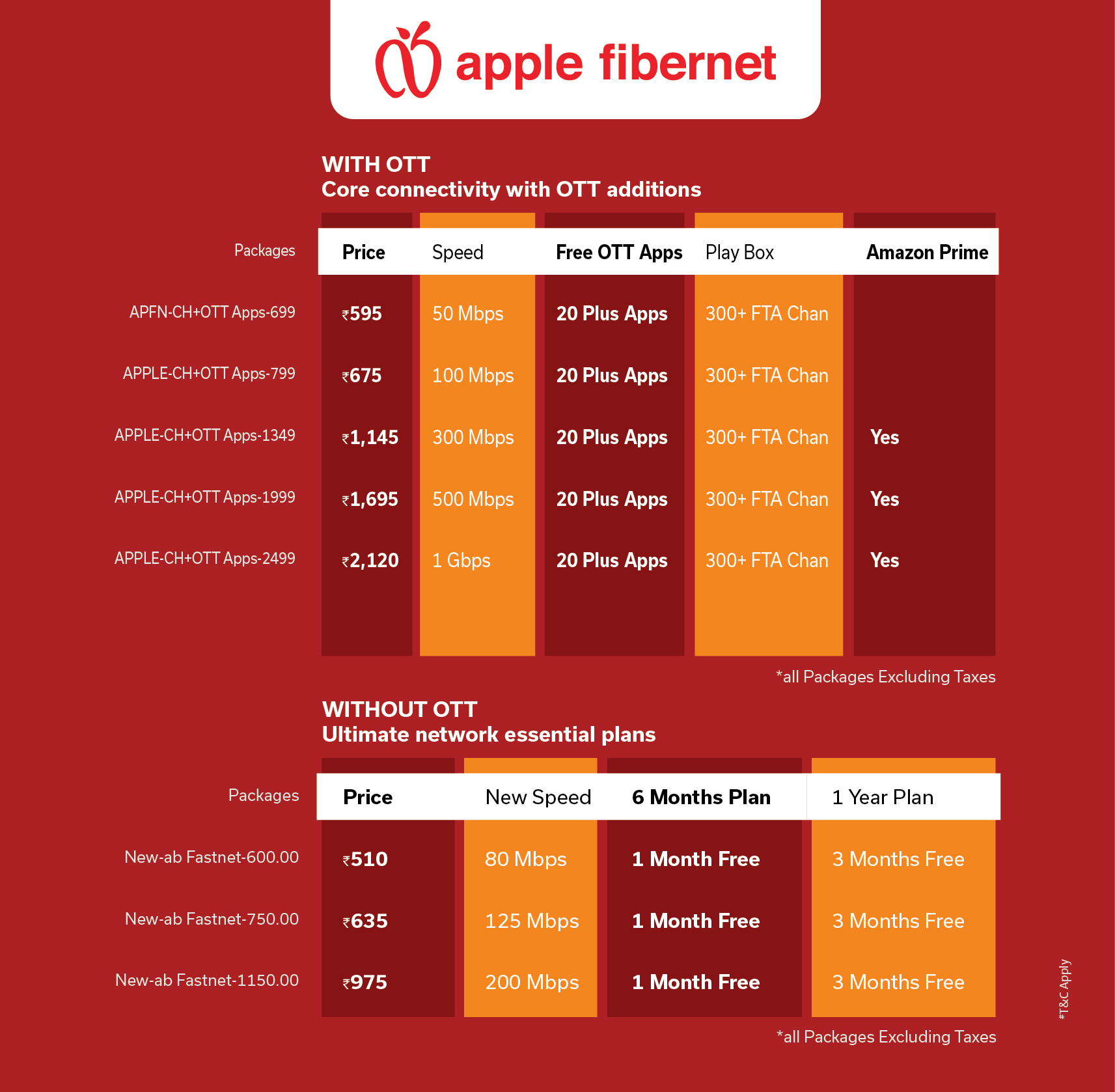
Apple Fibernet offers plans with bundled OTT applications and FTA channels alongside high-speed broadband services.
This combination makes broadband services more valuable for entertainment-focused households.
Reliable Home Internet Is Important for Families
Today’s families expect uninterrupted internet for the following:
- Education
- Entertainment
- Communication
- Smart home operation
- Work productivity
A poor home internet connection can affect multiple parts of daily life simultaneously.
This is why households increasingly prioritize:
- Stable speeds
- Strong uptime
- Consistent performance
- Better customer support